The Lifeline in Your Throat: Why Endotracheal Intubation Is One of Medicine's Most Critical Procedures

Breathing: The Thing We Never Think About
You take about 20,000 breaths a day. Each one happens without a conscious thought. Air flows in, oxygen reaches your blood, carbon dioxide flows out. It's so automatic, so reliable, that we forget it's happening at all.
But what happens when it stops?
In emergencies, a severe car accident, a heart attack, an allergic reaction that swells the throat shut, the body can lose its ability to breathe on its own. In the operating room, when general anesthesia is administered, the drugs that put you into a deep, painless sleep also suppress your natural drive to breathe. In intensive care units, patients battling severe pneumonia or sepsis may become too weak or too sick to move enough air through their lungs.
In all of these situations, doctors must take over the most fundamental function of life: breathing. And the way they do it is through a procedure called endotracheal intubation.
What Exactly Is Intubation?
At its core, intubation is straightforward in concept. A physician passes a flexible plastic tube called an endotracheal tube through the mouth (or sometimes the nose), past the vocal cords, and into the trachea, the windpipe that leads to the lungs. Once in place, this tube creates a secure, open airway. It can be connected to a mechanical ventilator that pushes air and oxygen into the lungs at precisely controlled rates and pressures.
Think of it this way: if your airway is a highway for air, intubation is like installing a protected tunnel that guarantees traffic keeps flowing, no matter what obstacles might otherwise block the road.
The tube itself is surprisingly modest. It is typically around 25 to 30 centimeters long and roughly the diameter of an adult's index finger. Near its tip, a small inflatable cuff creates a seal against the walls of the trachea, preventing air from leaking out when air is pushed in the lung. Tthis cuff serves another purpose that is just as vital, one that brings us to a concept most people have never heard of: airway protection.
The Guardian at the Gate: Airway Protection
Delivering oxygen to the lungs is only half of what intubation accomplishes. The other half, and in many clinical scenarios, the more urgent half, is protecting the lungs from what shouldn't be in them.
Here's the problem most people don't realize: your airway and your digestive tract share a common opening at the back of your throat. When you're awake and healthy, an elegant system of reflexes keeps everything sorted with food and liquid going down the esophagus to the stomach, while only air enters the trachea toward the lungs. You've experienced a failure of this system in miniature every time something "goes down the wrong pipe" and you erupt into violent coughing. That coughing reflex is your body's last line of defense prior to reaching the lungs.
But when a patient is unconscious, whether from a head injury, a drug overdose, a seizure, or general anesthesia, those protective reflexes are suppressed or absent entirely. The muscular valve at the top of the stomach may relax. Gastric contents which contain of a caustic mixture of stomach acid, partially digested food, and bile, can silently travel upward and spill into the unprotected airway. This is called aspiration, and it is one of the most dangerous events that can occur in medicine.
When acidic stomach contents reach the delicate tissue of the lungs, the damage is immediate and severe. The acid burns the lung lining, triggering an intense inflammatory response. Within hours, the patient can develop aspiration pneumonitis, a chemical injury that fills the lungs with fluid and dramatically impairs their ability to exchange oxygen. If bacteria from the stomach or mouth are carried along, a full-blown aspiration pneumonia can follow. In the most severe cases, aspiration leads to acute respiratory distress syndrome (ARDS), a life-threatening condition that may require days or weeks of intensive care.
This is where the inflatable cuff on the endotracheal tube becomes a true lifesaver. Once the tube is in place and the cuff is inflated, it creates a circumferential seal inside the trachea and effectively build a dam between the outside world and the lungs. Stomach contents, blood, saliva, and secretions that might pool above the cuff are physically blocked from reaching the lower airways. The lungs are sealed off, protected, and ventilated through the secure channel of the tube.
This protective function is why intubation is so urgently prioritized in certain patients even before they stop breathing on their own. A trauma patient with a declining level of consciousness, a patient vomiting blood, someone who has overdosed on opioids and is barely responsive, all these individuals may still be moving some air, but their airway is unguarded. Every moment without a protected airway is a moment where a single episode of vomiting could flood the lungs and turn a survivable situation into a catastrophic one.
In the operating room, this is also why anesthesiologists are so meticulous about fasting guidelines before surgery. The instruction not to eat or drink for several hours before an operation exists specifically to reduce the volume and acidity of stomach contents, minimizing the consequences if aspiration were to occur during the vulnerable period of anesthesia. For emergency surgeries where fasting isn't possible, the team takes extra precautions, including a technique called rapid sequence intubation, where anesthesia and muscle relaxation are administered in quick succession and the tube is placed as swiftly as possible to minimize the window of vulnerability.
Why It Matters So Much
It's hard to overstate how critical endotracheal intubation is. The brain begins to suffer irreversible damage after just four to six minutes without oxygen. That means the window for establishing a secure airway is vanishingly small in an emergency.
Intubation is the cornerstone of what physicians call airway management, and in medicine, there's an old saying: "The airway always comes first." Before you treat the broken bones, before you stop the bleeding, before you diagnose the underlying disease, you must make sure the patient can breathe. Nothing else matters if they can't.
Consider the sheer scope of this procedure's importance. Intubation is performed in operating rooms for surgical anesthesia, in emergency departments for trauma and critical illness, in intensive care units for patients on life support, in ambulances and helicopters by paramedics, and even on battlefields by military medics. It is, without exaggeration, one of the most commonly performed life-saving procedures in all of medicine, and one of the most consequential.
The Hidden Difficulty
Here's something that surprises most people: intubation is far harder than it looks.
The human airway is a complex anatomical landscape. To place the tube correctly, a physician must navigate past the tongue, the epiglottis (a flap of cartilage that normally protects the airway when you swallow), and through the narrow opening of the vocal cords, all while often working against the clock in a high-stress environment.
To visualize the challenge, imagine trying to thread a flexible tube into a small opening at the back of someone's throat, an opening you can't easily see, while that person is unconscious, possibly bleeding, and potentially in a position that makes access difficult. Now imagine doing it in under 60 seconds, because every moment of delay means less oxygen reaching the brain.
Several factors can make this already demanding task even more difficult. Some patients have anatomies that are naturally harder to intubate, such as a short neck, a receding jaw, prominent teeth, or obesity can all make this manoeuvre more difficult. Trauma patients may have facial injuries, blood in the airway, or cervical spine injuries that limit how much the head and neck can be moved. Patients with severe allergic reactions may have swollen airways that are narrowing by the minute.
Anesthesiologists, the physicians who specialize in airway management, train for years to master this skill. They learn to read the subtle anatomical clues that predict a difficult airway before the first attempt. They practice on simulators, on mannequins, and under close supervision in the operating room, gradually building the judgment and dexterity that the procedure demands.
What Can Go Wrong
Despite the best training and technology, intubation carries real risks and understanding them helps explain why the procedure demands such respect.
The most feared complication is delayed intubation or esophageal intubation: placing the tube in the esophagus (the tube leading to the stomach) instead of the trachea. If unrecognized, this means the ventilator is pushing air into the stomach while the lungs receive nothing. It is a rapidly fatal error. Modern practice mandates immediate confirmation of correct tube placement using a device called a capnograph, which detects carbon dioxide in exhaled breath, a gas that only comes from the lungs and never the stomach.
Other potential complications include damage to the teeth or soft tissues of the mouth and throat, vocal cord injury that can cause temporary or permanent hoarseness, and aspiration which, as we've discussed, can be devastating
There's also a more subtle but significant risk: the physiological stress of intubation itself. The act of placing a tube through the vocal cords can trigger dramatic changes in heart rate and blood pressure, which in critically ill patients can lead to cardiovascular collapse. This is why physicians carefully select and administer medications before intubation, drugs to sedate the patient, relax the muscles, and blunt the body's stress response.
The Human Element
Behind every intubation is a highly trained professional making rapid, high-stakes decisions. But what's often invisible to the public is the emotional weight this carries.
Imagine being the physician in a trauma bay at 3 a.m., standing over a patient who has been in a severe accident. The patient's oxygen levels are dropping. There's blood in the airway. The neck may be injured. You have perhaps 60 seconds to secure the airway, and the decisions you make, which device to use, which medications to give, how to position the patient, when to call for backup, will determine whether this person lives or dies.
This is the reality that anesthesiologists, emergency physicians, and critical care doctors face routinely. It's a responsibility that demands not just technical excellence, but composure under extreme pressure and the wisdom to recognize when to change strategies if a first approach isn't working.
The field has increasingly recognized that intubation is not just an individual skill but a team effort. Modern airway management emphasizes structured communication, predefined roles, and rehearsed backup plans. In Quebec and some other provinces, respiratory therapists are key partners during an intubation. They help prepare the patient and material, they perform adjunct manoeuvres to help intubation such as putting a slight stabilizing pressure on the patient throat, repositioning the head, or removing the stylet that rigidifies the tube and facilitates tube control. When a difficult airway is anticipated, a team assembles with alternative equipment at the ready different blade sizes, flexible fiber-optic scopes, and in extreme cases, surgical instruments for establishing an airway through the front of the neck.
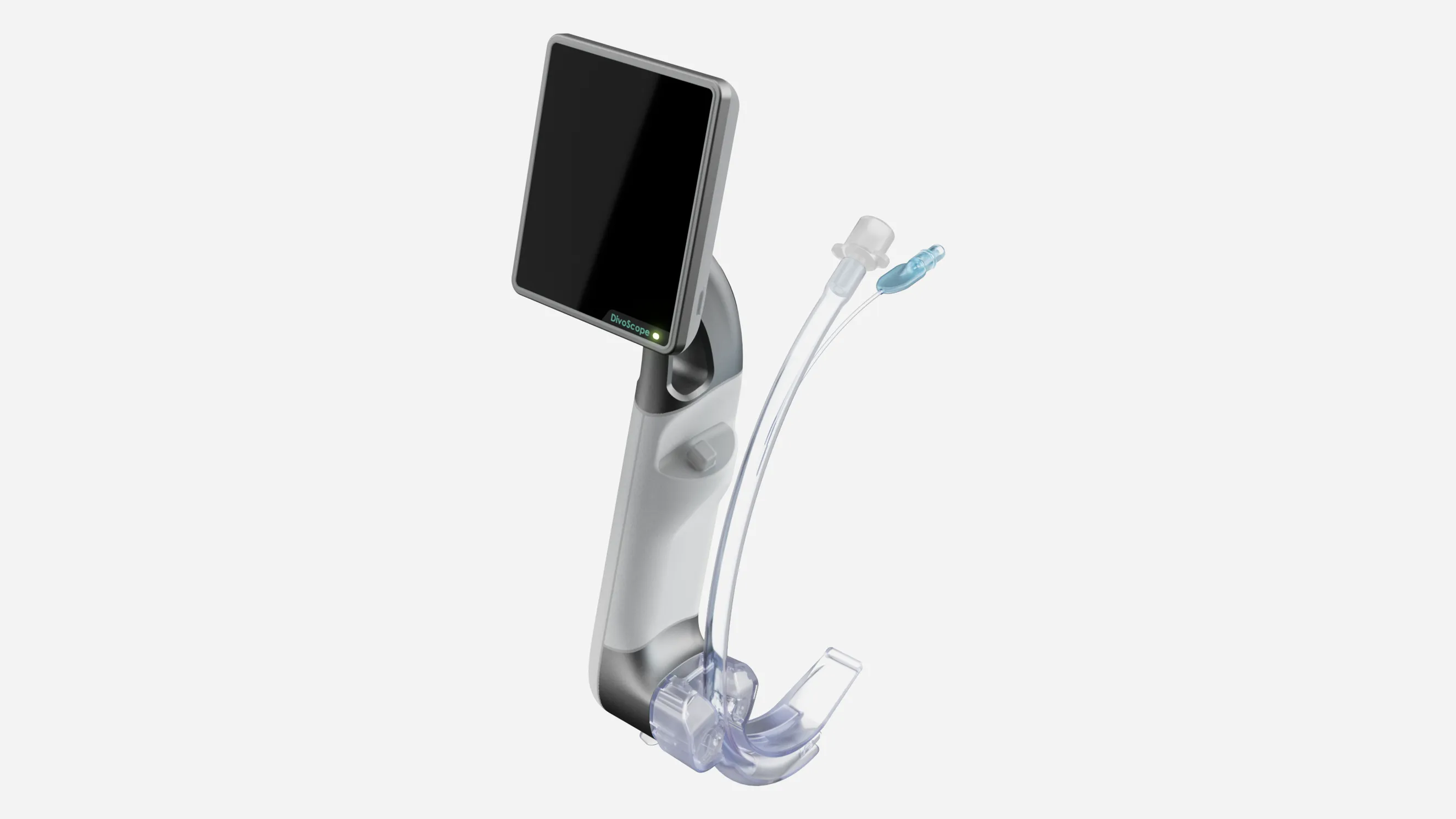
In all cases, you can understand why physicians and other operators are extremely interested in new technologies that can improve the success rate of intubation, the time needed to complete the intubation, as well as reducing the cognitive load required to perform this life-saving procedure. The Divoscope aims at meeting these three crucial improvements and the research conducted so far support its effectiveness.
Why You Should Care
You may never need to know the details of endotracheal intubation. But if you or someone you love ever faces a major surgery, a serious accident, or a critical illness, this procedure will likely be part of your care.
Understanding it, even in broad terms, can help you ask better questions before a surgery ("What is the plan if my airway is difficult to manage?"), appreciate the expertise of the teams caring for you, and feel a little less frightened if a loved one is intubated in an ICU.
It's also a reminder of something we too easily take for granted: every breath is a gift, sustained by a body that works in remarkable ways. And when that body falters, there are skilled professionals and evolving technologies standing ready to bridge the gap, with one carefully placed tube at a time.
Pascal Laferrière-Langlois, MD, MSc is a professor of anesthesiology and pain medicine at the Université de Montréal and director of the Laboratory of Artificial Intelligence in Medicine of Montreal (LIAM). His research focuses on innovative technologies, including AI-guided videolaryngoscopy and the development of next-generation airway management technologies.